Subtypes
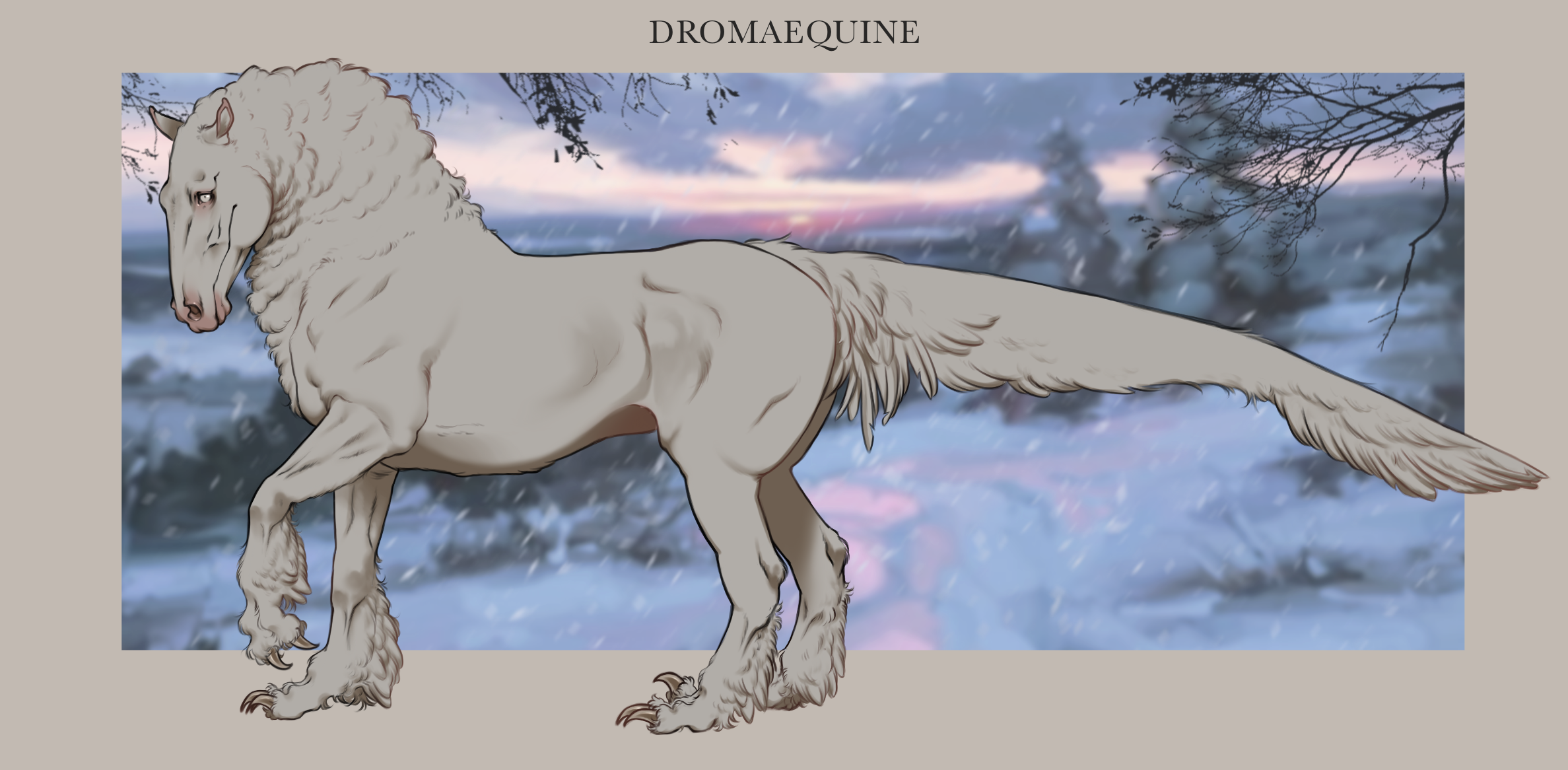
Kamchatka (Dromaequine Subtype)

Arctic Subtype
Kamchatka Dromaequines evolved from escaped populations that established themselves in the cold Kamchatka Peninsula.
They possess dense insulating coats, heavily feathered legs, enlarged neck ruffs, and thick tail coverings that protect against extreme temperatures.
Their broad, fur-covered feet help distribute weight across snow and ice, allowing them to travel efficiently through frozen environments. They're very popular in many parts of Russia, Canada & Scandinavia.
Kamchatka Dromaequines are generally shorter and more heavily built than other ecotypes and are renowned for their resilience.
Base
Add-ons
Additional official Kamchatka Dromaequine accessories, lineart edits, and optional appearance assets will be listed here as they become available.
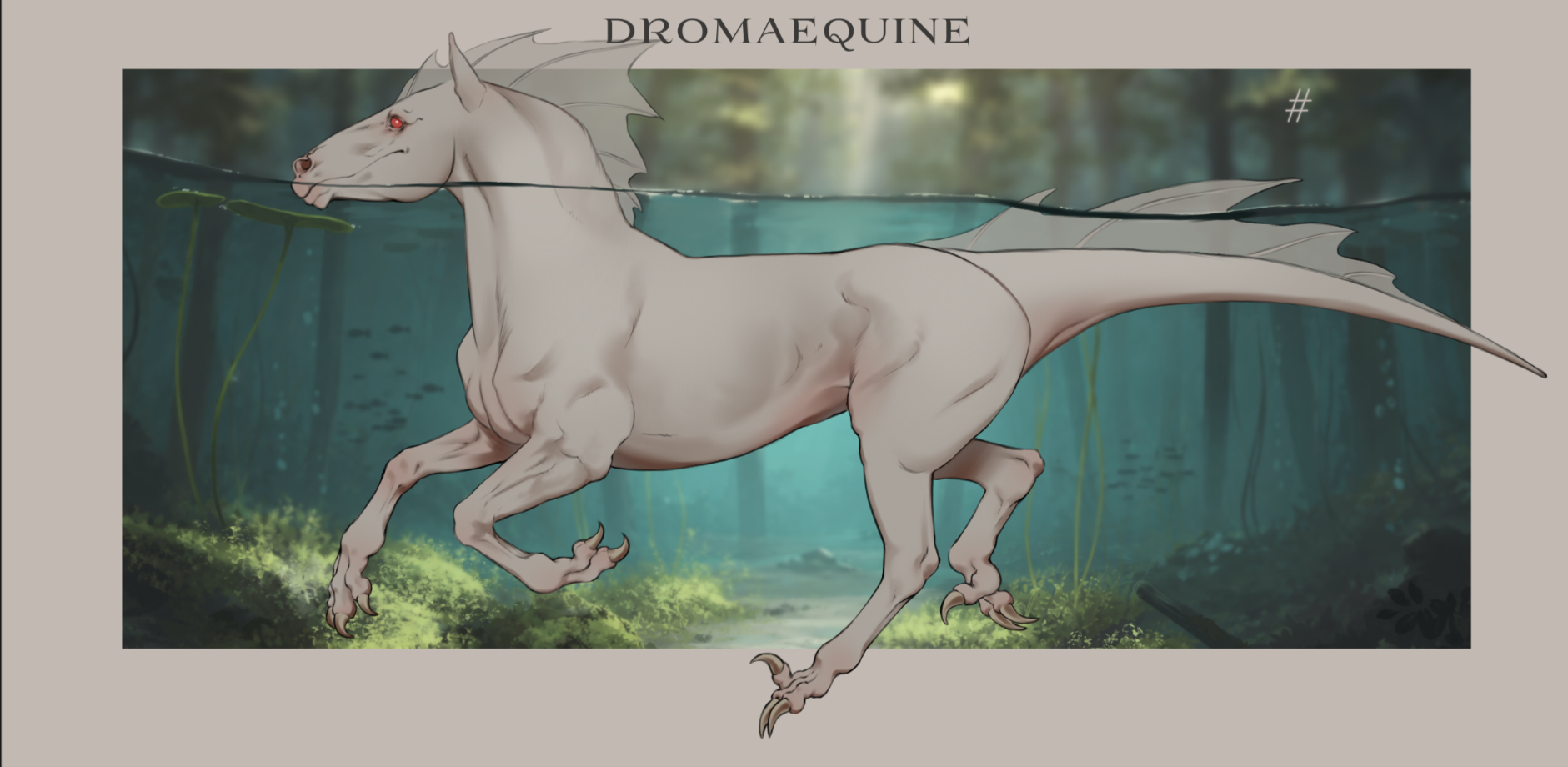
Kutu (Dromaequine Subtype)

Kutu Dromaequine
Aquatic Subtype
Originally discovered near Kutu in the Democratic Republic of the Congo, Kutu Dromaequines are highly specialized for life around rivers, marshes, wetlands, swamps, and large lakes. While perfectly capable of traveling on land, they are most at home in and around water, where their bodies are adapted for efficient swimming and maneuverability.
One of their most recognizable features is the series of flexible dorsal fins running along the neck and tail. These fins provide additional stability while swimming, assist with balance during sharp turns, and are frequently used as visual signals when communicating with other members of the flock. Kutus may also posess webbing between their claws, however some don't have it.
Kutu Dromaequines are naturally curious around water and often spend much of their day swimming, diving, or resting along shorelines. Wild flocks commonly cooperate while fishing, herding schools of fish into shallow water before taking turns catching them. They are considered the strongest swimmers of all Dromaequine subtypes.
Split Jaws
Kutu Dromaequines are the only subtype naturally capable of possessing Split Jaws.
Rather than forming a single lower jaw, the lower palate develops as two independently moving halves that can separate outward when the mouth opens. Although the appearance can seem intimidating, it is a completely natural anatomical variation unique to the Kutu subspecies and does not negatively affect healthy individuals.
Split Jaws are considered an Appearance Trait. They do not require any mutation items or unlocks. Owners may freely choose whether or not their Kutu Dromaequine possesses the trait.
Base
Add-Ons
Additional official Kutu accessories, lineart edits, and optional appearance assets will be listed here as they become available.
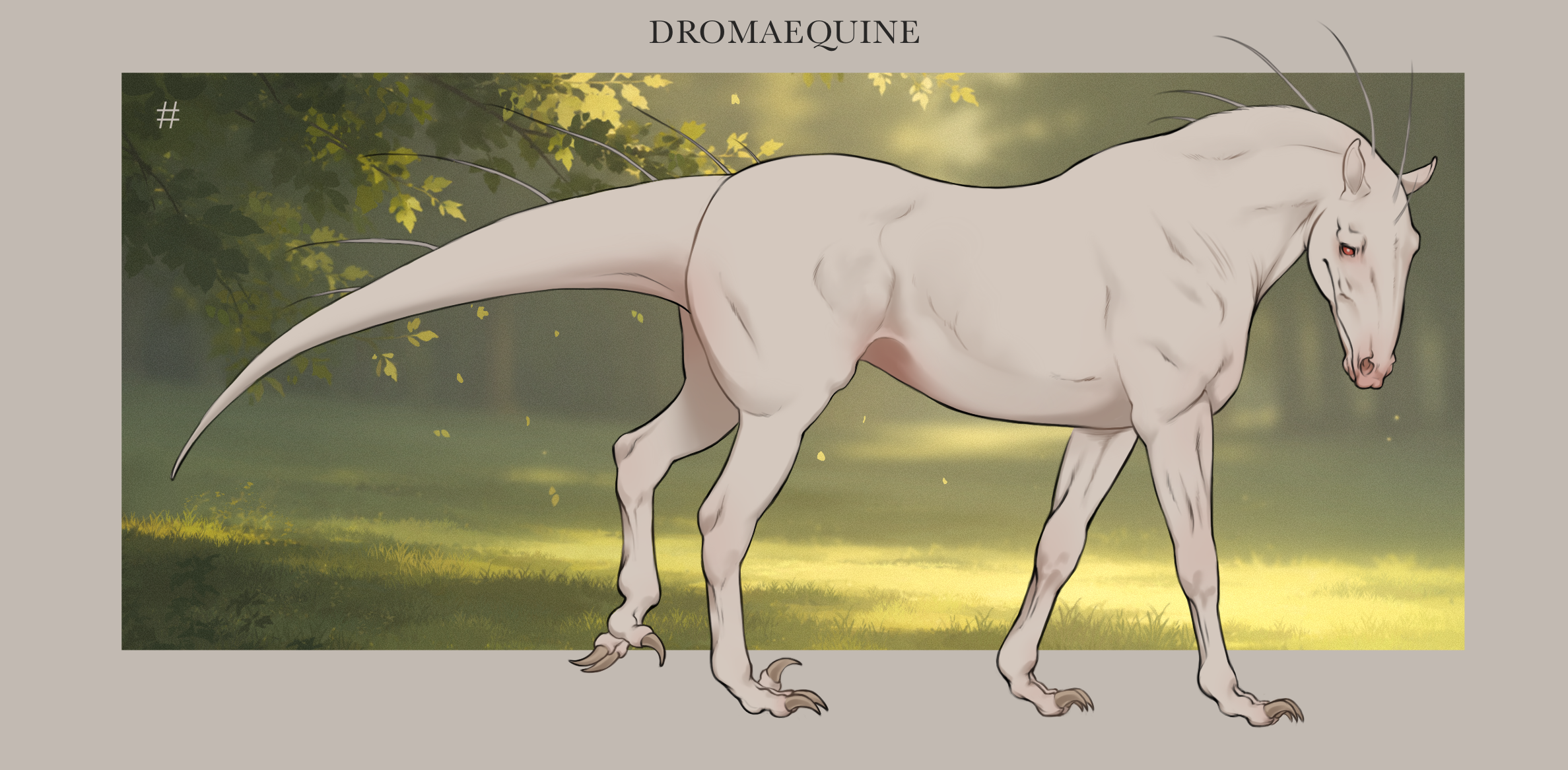
Classic (Dromaequine Subtype)

Standard Dromaequine
Standard Subtype
The most widespread and adaptable form.
Standard Dromaequines can be found in forests, plains, mountains, and scrublands. They represent the closest living descendants of the original engineered population and possess the balanced body structure most commonly associated with the species.
Base
Add-ons
Additional official Standard Dromaequine accessories, lineart edits, and optional appearance assets will be listed here as they become available.