Species
Dromaequine
The Dromaequine
About
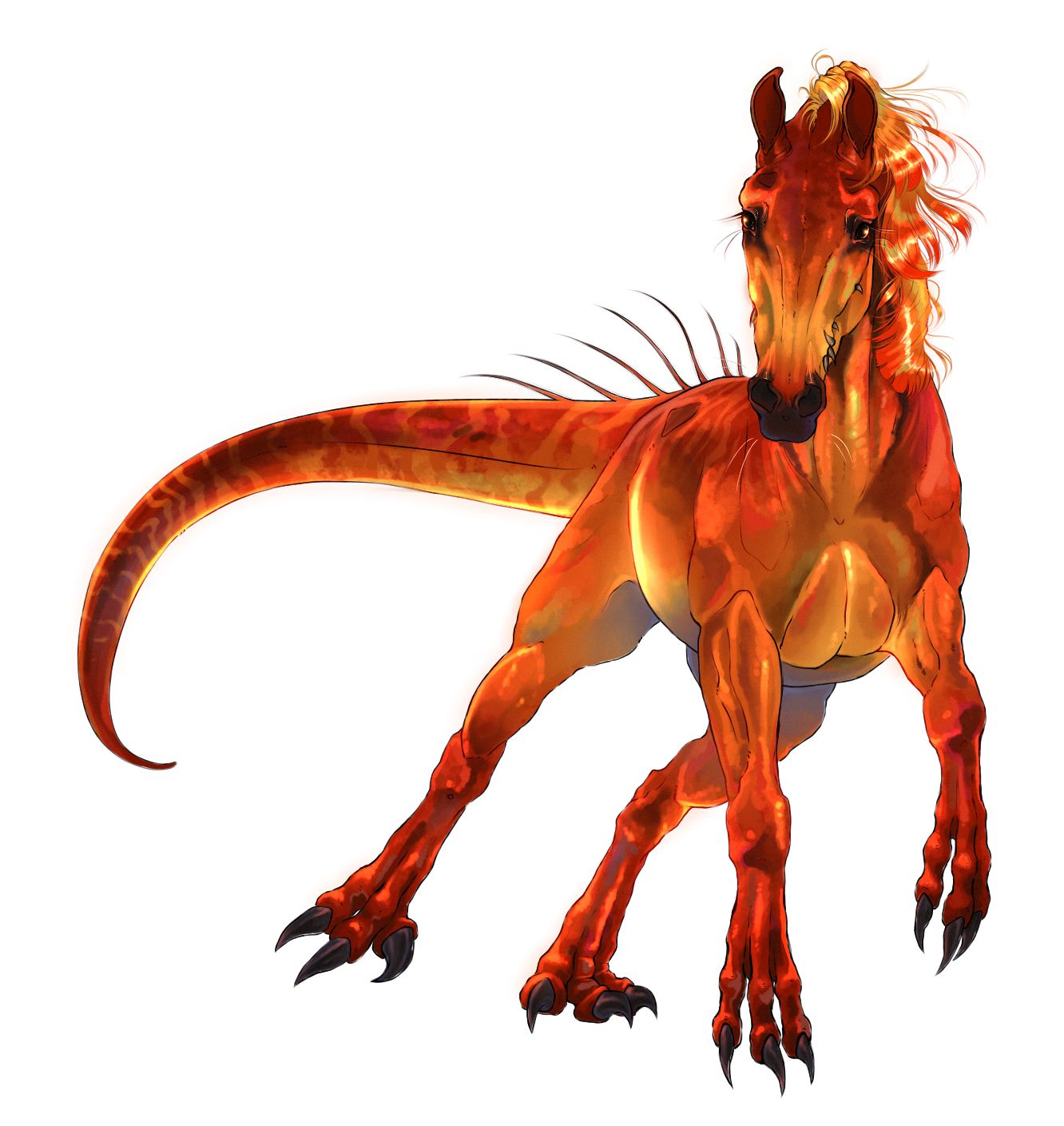
The Dromaequine is a bioengineered species originally developed through experimental genetic engineering programs. Designed to be highly adaptable, intelligent, and capable of surviving in a wide range of environments, the species combines traditional equine traits with genetic material sourced from numerous animals, including reptiles, birds, and extinct species.
Although the original purpose of the project remains unclear, surviving records suggest that Dromaequines were intended to become versatile working animals capable of thriving in environments where traditional livestock could not.
The project ended abruptly following a catastrophic containment failure. Hundreds of Dromaequines escaped into the surrounding wilderness, where they established self-sustaining populations. Over the following decades, these populations spread across multiple regions and developed into several distinct ecotypes.
Today, Dromaequines exist both in the wild and in captivity. Many are domesticated as mounts, companions, or working animals, while vast feral herds continue to roam remote landscapes. Due to their unusual genetic structure, no two individuals are truly identical.
Physical Characteristics
Dromaequines possess a unique combination of equine and theropod features.
- Long muscular tails used for balance and communication.
- Powerful necks capable of supporting heavy musculature.
- Raptorial feet equipped with enlarged claws.
- High intelligence and advanced problem-solving abilities.
- Exceptional agility and endurance.
Despite their predatory appearance, Dromaequines are omnivorous and consume a wide variety of foods depending on their habitat and availability.
Behavior
Wild Dromaequines live in social groups known as flocks.
Unlike traditional horse herds, flocks are highly structured societies that rely heavily on body language and visual communication. Tail movements, vocalizations, posture, and crest displays are used to express intentions and maintain social bonds.
Most flocks are guided by experienced females, who lead migration routes and identify suitable feeding grounds. Males often compete through displays of strength, coloration, and agility rather than direct combat.
Dromaequines are naturally curious animals. Individuals have been observed solving simple puzzles, opening gates, and using objects within their environment to obtain food.
Diet
As omnivores, Dromaequines consume both plant and animal matter.
- Grasses
- Leaves
- Fruits
- Roots
- Seeds
- Fish
- Insects
- Eggs
- Small mammals
- Carrion
Different populations may favor different food sources depending on their environment and available resources.
Lip Docking
Lip docking is an unethical cosmetic procedure once used to alter Dromaequine appearance by permanently exposing the gums and teeth. The practice causes unnecessary suffering and has since been banned.
Read MoreGenetics
Unlike many natural species, Dromaequines do not follow a traditional genetic system.
Due to their bioengineered origins and generations of unstable mutations, coat colors, markings, patterns, and most physical traits are considered genetically unpredictable. This allows individuals to display an extraordinary amount of variation.
Researchers often refer to Dromaequines as "living mosaics" due to their unusual genetic diversity.
The only traits with defined inheritance patterns are subtypes and anomalies.
Design Guide
Ready to create your own Dromaequine? While the species allows for an incredible amount of creativity, there are still a handful of design standards every official character should follow. Learn about coat design, foal inheritance, lineart rules, community guidelines, and more in the official Design Guide.
Subtypes
There are currently three recognized Dromaequine subtypes:
- Classic
- Kutu
- Kamchatka
Each parent has a 50% chance of passing their subtype to their offspring. A foal will always inherit one complete subtype and can never be a combination of multiple subtypes.
Classic × Kutu = 50% Classic, 50% Kutu
Kutu × Kamchatka = 50% Kutu, 50% Kamchatka
Classic × Classic = 100% Classic
Anomalies
Anomalies are rare inherited mutations that affect specific physical features rather than overall appearance.
- Iridescence – The coat reflects subtle rainbow tones depending on lighting.
- Mane – A traditional equine mane grows instead of the dorsal fin.
- Hooves – Standard hooves develop instead of characteristic raptor claws.
Each anomaly has its own inheritance chance during breeding and may also be acquired through quests, events, or special rewards.
FLOCK
The Federation of Lineage, Outreach, Care & Conservation (FLOCK) is the primary international organization responsible for the welfare, registration, conservation, and ethical management of Dromaequines.
FLOCK oversees rescue operations, breeding regulations, lineage records, research, accredited training programs, and handler education to ensure the long-term health and preservation of the species.